Know of the Foods That Actually Stain Your Teeth and Those That Don’t

Despite brushing the teeth religiously twice a day with the best available dental products available in the market, one only ends up in aghast to see that their teeth is far from being shiny. It is a story that at least 7 out of 10 people would easily associate themselves with. Understandably teeth stains can be very embarrassing and hard to get rid of. Does the food that you have a role to play? Absolutely they do. Much as you are curious to know which food is making your tooth cleaning efforts go in vain, the top dental hospital in Delhi have thoroughly researched on the food and drinks that are the culprits of yellowish teeth. Let’s have a look.
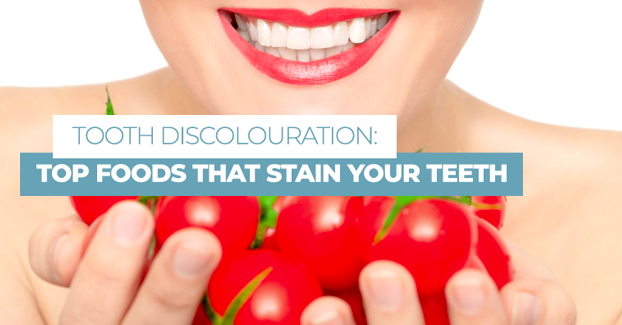
1. Citrus and acidic food- The yellowish teeth is the result of tomatoes and lime juice that one may take regularly over a period of time. Though nutritious for the body in several aspects, it damages the enamel that might expose the yellow hued dentin. It is basically the tissues under the enamel made up of mostly calcium and phosphate.

2. Coffee- This may disappoint those who rely heavily upon their cup of coffee to get started for the day or to keep sleep at bay during late night shifts but the tannins (acidic polyphenols) that lead to staining and discoloration. Coffee also contains caffeine that alters the pH balance of the mouth. This makes the acidic food even more active in spoiling the shine of your teeth.

3. Red wine- The worst part of drinking red wine? It does not create yellow stains like tea and coffee do. Rather they create grey stains that are even harder to get rid of when compared to the yellow stains. However, the only bright side is that it can help fight cavities despite the presence of tannins. Hence having a glass or two of once in a while may be fine.

4. Blueberries- An excellent food rich with antioxidants but it is just as hard to remove the stains of from the teeth as it is to remove from the clothes. Pomegranates are also on the blackout list for the same reasons.
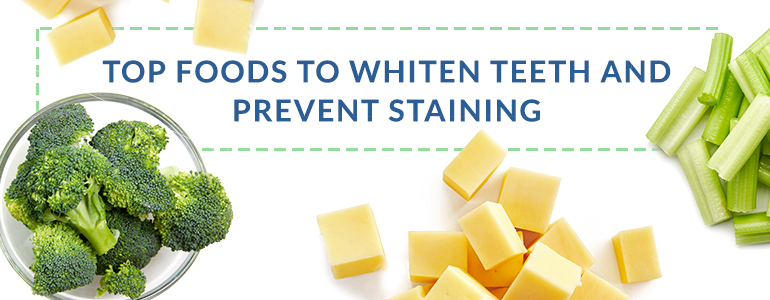
So what is the best food that prevents staining of teeth?

1. Baking soda- If you regularly scrub your teeth with baking soda then you are going to have the teeth whitened eventually. You can simply dip the toothbrush into the baking soda powder and that would be all. But the best dentist in Dwarka also advises not to make this a daily habit as it has abrasive properties, the overuse of the same can harm the enamels.

2. Nuts- They are always the first choice of weight watchers and those who want their skin shine even after aging. But you can now add nuts in the list of to-have foods for the teeth as well. Because the nuts have high protein which is a necessity to keep the teeth strong. Chewing the nuts can produce lots of saliva that further helps in cleaning the mouth.

3. Strawberries- The most natural and delicious fruit to prevent the staining of teeth are strawberries. It contains malic acid and the same can have double the effect if you add some baking soda to the mashed strawberries.
Make the Most of the Last Day with Braces

The happiness of finally getting away with braces cannot be defined in words. After months of toiling and many nights, you are finally going to get the beautiful, straight smile you want and need. The straightened teeth give great aesthetics as well as better oral health. However, every good things call for a certain “don’ts” that you need to abide by so you can get the maximum results. The fact is, there are some foods and drinks do not go well with the braces. As a result, on your last day before braces, it may be a good idea to eat these items to get things back on track.

Eat some restricted food

Yes you can! If you are going to get your braces off the next day, consider snacking on some of the following foods, since you are going to have to avoid them once your braces are in place. Some foods to consider snacking on include:

• Nuts
• Hard candy
• Popcorn
• Crusty breads
• Pizza crust
• Chewing gum
• Raw carrots

Brush and Floss Normally

Dental braces are placed by using special tools and techniques to ensure your teeth remain clean. It is equally important to use your dental floss and toothbrush normally just as you did before. This is nothing but a regular cleaning routine that you need to follow after consulting your orthodontist without any worries. For now, just enjoy your last few brushes before the brackets and wires getting out of your way. Continue reading

Some Good Habits That People with Dentures should be Aware of

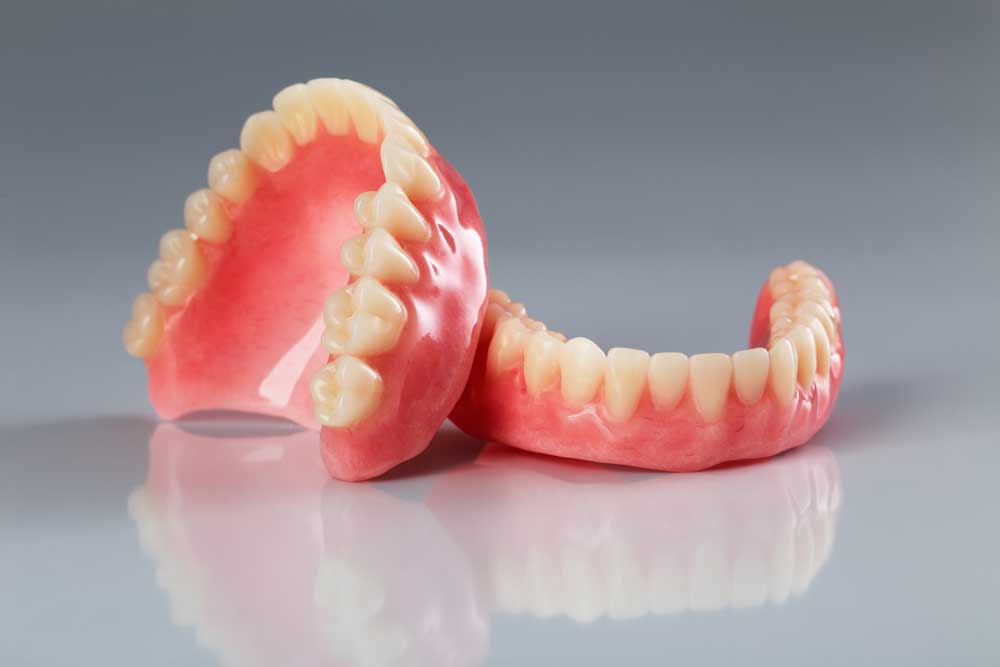
Of all the things that the dental clinic in Delhi try and resolve for the patients, the most common thing they do is guide the patients using denture and how talk and eat around them. Apart from the stringent guidance and instructions there are few tidbits that are always talked of.

1. Avoid Difficult to eat foods- This is especially important when you’re just learning how to eat with dentures, but foods like nuts, steaks, and strawberries can be particularly difficult to chew. The more you avoid the sticky foods like peanut butter, honey, and marmalade the more your dentures can stay unscathed and would also pose less difficulty in cleaning. Instead, you should make it a habit to eat soft foods and take small bites. Some of the smaller food that fit the bill are eggs, yogurt and fruits like watermelon and grapes are a good starting point (make sure both are seedless!) Try and chew your food by taking small bites. Also do chew slowly and use both sides of your mouth at the same time to stop your dentures from sliding forward or moving around in your mouth.

2. Make sure your dentures fit properly- If you experience any pain or discomfort when eating, go to seek the consultation at the top dental hospital in Delhi as soon as you can. Dentures that are either they’re too loose or too tight will hurt your mouth as you eat and make your gums sore. You should never dread a meal because you’re worried about denture pain!

3. Be aware of how dentures affect your ability to detect hot and cold foods- Since dentures (particularly upper ones) cover some of your taste buds, there is likelihood that your ability to distinguish between extremely hot and extremely cold foods will not be the same anymore. The pain caused by eating something cold as an ice cream may not be shooting but that doesn’t mean your body’s not being affected by it. An extra amount of caution is needed to so as not to injure your gums by accident when eating anything difficult to chew or with bones.

4. Clean your dentures regularly and thoroughly- Your dentures are an extension of your mouth, so they absolutely need to be taken care of like your regular teeth. As per the guideline of the top dental hospital, one should brush twice a day with a toothbrush and a cleaning agent made specifically for dentures. There is an easier method to clean the dentures that do not require much time. You simply need to to use warm salt water to rinse out your mouth every time you’ve eaten or are about to take out/put in your dentures. Store your dentures in water or cleaning solution and use an effervescent denture cleaning tablet to keep odors and bacteria at bay. Visiting the best dentist in Dwarka twice a year is always recommended and you must also let them know the moment you feel discomfort with your dentures if needed.

Some Useful Oral Health Tips for Older Patients

As we get older, we are likely to let certain aspects of your oral hygiene routine a miss. This can be particularly dangerous as you make yourself more susceptible to cavities, plaque build-up, and even bacteria that can spread and negatively affect your overall dental health. Therefore one must continue to give due attention to the oral problems which are potentially risky for the overall health. Given below is the list of simple steps by the best dental hospital in Delhi NCR to ensure you’re keeping your mouth happy and healthy no matter what age you are.

1. Cut down sugar intake levels- This is important on all counts as far as your dental health go. More so when you are susceptible to tooth decay or other dental issues. Therefore the older patients must try to limit how much sugar you have, check the labels of foods you’re uncertain about before eating them, and when you do allow yourself to indulge – eat those sweet (or sticky) snacks with a meal to limit the likelihood of decay. In addition, do your best to cut down on adding sugar to things like coffee and tea.

2. Stick to water as much as you can- It may sound very disappointing if drinking sugary drinks is what you are into. But one must realize that water is a vitally important part of maintaining good health. In addition to keeping your body hydrated, water helps flush away any food particles that might be lingering in between your teeth after eating. If you find plain water with every meal dull, why not switch it up with sparkling water? You can ever try different naturally flavored options like lime, lemon, and orange.

3. Use a soft bristle toothbrush- Brushing and flossing at least twice a day is the most important thing you can do to maintain your oral health, says the best dentist in Dwarka. If you find yourself experiencing any sense of discomfort while brushing, don’t let it dissuade you from keeping up with your hygiene. Make sure you’re using a soft bristled brush that will be gentle on your gums, and if the actual size of the brush is a problem, try a child size that more easily reaches the back of your mouth or a powered toothbrush with a large handle that’s easier to hold on to. When brushing, make sure to get your teeth and gums as well as the folds between the teeth and the cheeks. If you wear dentures or partial dentures, don’t forget to take them out before brushing and clean them separately using the appropriate materials.

4. Be aware of the effects your medication can have on your mouth- Ask your dental hospital Delhi doctor and dentist if there are any specific side effects or concerns you should be aware of if you start taking a new medication. Some drugs can cause dry mouth, for instance, which can increase your chance of developing tooth decay because it limits the saliva production in your mouth. Other medicines might contain sugar which can linger in your mouth. See if there’s a sugar free option available, and if not, make sure to always rinse your mouth out with water after taking them.

Do You Grind Your Teeth at Night? It could be Bruxism.

Regardless of how hard our efforts are to keep your teeth clean, you might still be harming them overnight or in other situations without even realizing you are doing it. There is a condition that much experience i.e. we tend to grind our teeth or clench the jaws. This condition is known as bruxism. This occurs mainly when a person is under stressful situations or in sleep. If not addressed at the right time, it can wear on your mouth and cause permanent damage. Hence we try to see the reasons that trigger bruxism and look at the possible solutions in long and short term treatment.

Causes and Symptoms of Bruxism

The dental hospital in Dwarka has pointed out stress and anxiety as the common reasons for teeth grinding and jaw clenching. This can occur during the day or while you are sleeping. Bruxism is one of the many benign ways by which our body absorbs the stress even though we are totally unaware of the same. It is therefore advised that you pay attention to the movement of your mouth whilst you are in a stressful situation.

The other factors that contribute bruxism are:
• substance abuse (drugs, alcohol, and caffeine),
• sleep apnea, and bite
• Alignment issues.

A revealing symptom that points toward having bruxism is waking up with a sore mouth or a tight jaw. Worst, you can also see your tooth getting worn down or develop odd patterns over time. Though these changes are not considered obvious as many people tend to grind the molars and back teeth that are always not visible. Continue reading

Can the Lost Teeth be Replaced?

Certainly with the implant dentistry today is possible to replace a single tooth, several teeth or an entire arch.

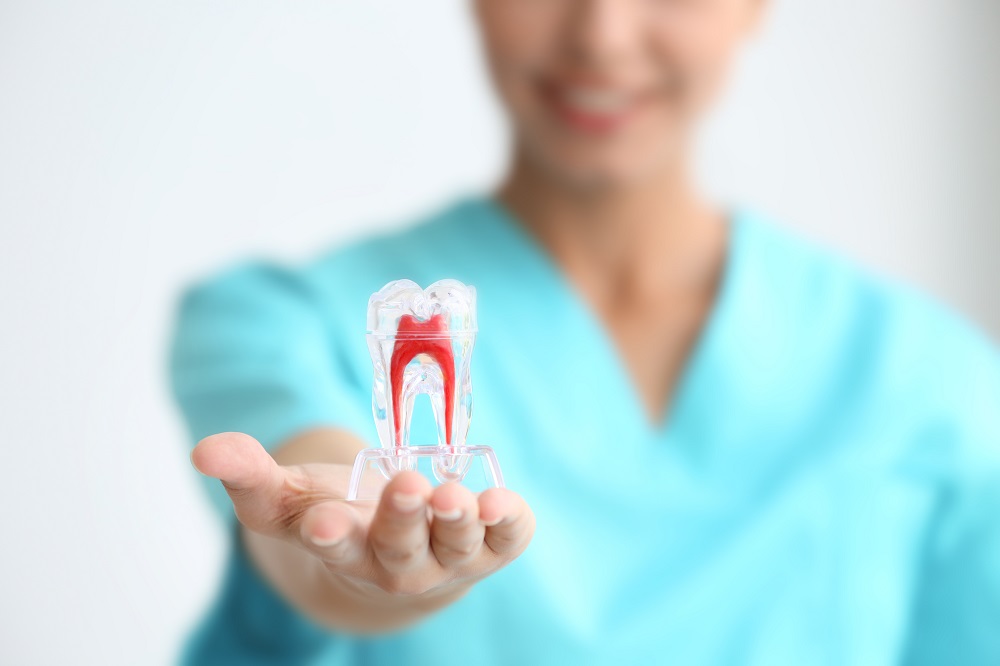
This branch of dentistry deals with the insertion into the bone of special “screws”, which are inserted into the bone replacing the root of the missing tooth. These are made of virtually pure titanium (99%) and have different shapes and surfaces, depending on the manufacturer. However, they are all totally biocompatible and there is no possibility of the commonly called “rejection”.

The implantology of the tooth is nowadays a very predictable discipline and, if it operates correctly, it has little post-operative complications.

The survival rates of the implants are very high: 95% in the maxilla, 99% in the mandible and, with the continuous improvement of the techniques, tend to rise.

How is an implantology procedure performed?

First of all it is necessary to contact a dental hospital in Dwarka who specializes in implant surgery or who has proven experience.

It starts with a dental visit

The dental examination is followed by the best three-dimensional radiographic investigations (CBCT). With these it is possible to analyze the quantity and the quality of the bone where the screws will be inserted. Moreover, through special software it is possible to obtain 3D rendering (virtual simulation) of the aesthetic and functional rendering that the presence of new teeth will produce.

This simulation not only has a demonstrative purpose of how the “work” will be done, but will instead serve the Implantologist to precisely identify the exact point where the screws are to be inserted.

Subsequently the intervention is carried out

The actual intervention consists, after a small opening of a window in the gum, in the preparation of the site with special drills that will create the correct housing of the implant.

It will then proceed to its screwing (just like a screw) until its end of stroke. Two dots of suture of the gum and the vine will be “buried”. The gingiva heals in 2 days while it will take 2 months for osseointegration to take place (the structural and functional connection between the bone (mandibular and maxillary) and the titanium screw that has been inserted into it).

Finally we proceed to return

After this time, best dental hospital in Delhi proceed to “return”: a small hole is made with the screw which has a threaded head suitable to support the new tooth (dental crown)built by the dental laboratory.

Final phase of an implantology operation

Both primary surgery and re-entry are performed with normal dental anesthesia (the one for fillings to be clear) and involve a slight post-traumatic pain lasting for one day.

The perfectly integrated implant-tooth will be the new substitute tooth practically for life!

The technique described is that which is traditional or 2-step so-called and is classically used in the posterior areas.

Dental Clinic: How to Choose Yours?

Information and keys to choose the best dental clinic possible according to our needs.

Having a healthy smile is not only achieved with adequate daily care, but visits to the dentist are also necessary. Although there is no known problem, it is advisable to visit a dental clinic at least once a year for a complete review. But before choosing which dental clinic to go to, one must think carefully about what factors should be evaluated.

Keys to choosing a dental clinic

Given the high supply it is of vital importance to pay special attention to the keys that we show you below to make a correct decision:

Seriousness in the explanations

There are few advertisements for dental clinics that we face every day. In many of them it is not strange to find exaggeratedly low prices that hide costs that when the patient goes to the clinic did not know. Or when they promise lifetime guarantees with miraculous treatments.

This type of slogans tells us that this is an unprofessional clinic that only seeks to get patients and avoid them is the best decision.

Variety of financing options

At many occasions, dental treatments have a high price that everyone cannot assume in a single payment. Knowing the different financing options that clinics offer their patients is a very important detail that must be evaluated before choosing a dental clinic or another.

Proper planning of treatments

Before accepting a budget at a dental clinic you have to be satisfied with the explanations given by the dentist about the treatments that are necessary and their deadlines. Receiving a correct planning with adequate deadlines for each of the treatments and with the information of what each of them consists of is elementary.

It is advised not to opt for dental hospital India who go on the fly making decisions on what to fix without proper prior planning.

Experience in the sector

Another aspect that generally has a positive influence on the treatment received and on the quality of the treatments is the time that the clinic has been operating. More experience most of the time means better treatments and more professional knowledge, so the final result will be more satisfactory.

Do not trust if the visit is very short

When you go to a dental hospital in west Delhi for the first time, you must undergo a thorough examination to determine the general state of health of your mouth. The professional will explain the treatment, the duration and the necessary tests.

The latest in technology

It is our right and the duty of a professional in this sector to make available to his patients the most advanced material and technology. If what we observe in the clinic is obsolete equipment and material, it is evident that what is sought is cost savings. So, if you plan your visit to the dentist, burn terms such as digital radiology, intraoral scan or 3D surgeries. Undoubtedly, it means that this clinic is the latest in technology.

As you can see you have to pay attention to different aspects before making a decision as important as choosing a dental clinic. Without a doubt it is something that supposes an important economic disbursement at times. Therefore, assessing all the keys we have offered in this article is essential to make a decision that we do not regret in the future.

An Overview of Basic Dental Cleaning Vs Deep cleaning

On average, by the time we reach our 50 years we will have lost twelve of our permanent teeth. Really! This alarming statistical number, from the National Institutes of Health (NIH), should clarify any assumption that tooth loss presents only a challenge to older people or, as the case may be, to a problem of the 18th century.

Although the loss of teeth is often caused by traumatic events, such as vehicle accidents, injuries caused by a sport or the result of some act of violence, the NIH is very clear: the two main reasons that cause tooth loss they are caries and periodontal diseases, as well as its precursor, gingivitis.

During the normal and daily course of the day, our teeth and gums are exposed to battery attacks, viruses and even parasites. All these present a risk, but it is the presence of “colonies” of bacteria that form a gelatinous layer in our teeth, known as dental plaque, which establishes the conditions for caries to form as well as periodontal disease, also known as gum disease.

Why our teeth need professional cleaning?

Think of a professional cleaning as if it were a super weapon against dental plaque, that is, as an arsenal that combats gum disease. Home oral hygiene done on a regular basis protects against plaque, but only for a limited time. The plaque accumulates on the surface of the teeth and in the gum line and this, over time, becomes tartar.

A professional cleaning helps to safeguard our permanent teeth, our health and our pocket. Consider all the costs in terms of stress, money and time required to perform a root canal, an extraction or an implant. In addition, periodontal disease can also adversely affect our general health and it has been linked to heart disease, dementia and even stroke.

Dental cleaning

Despite the fact that almost half of adults aged 30 or older have chronic gum disease, most of us simply need basic cleansing to prevent cavities and treat minor gum diseases. For cases of medium or severe gum disease, a deep cleansing is probably necessary to prevent serious infections and loss of teeth.

What to Expect from a Basic Cleaning?

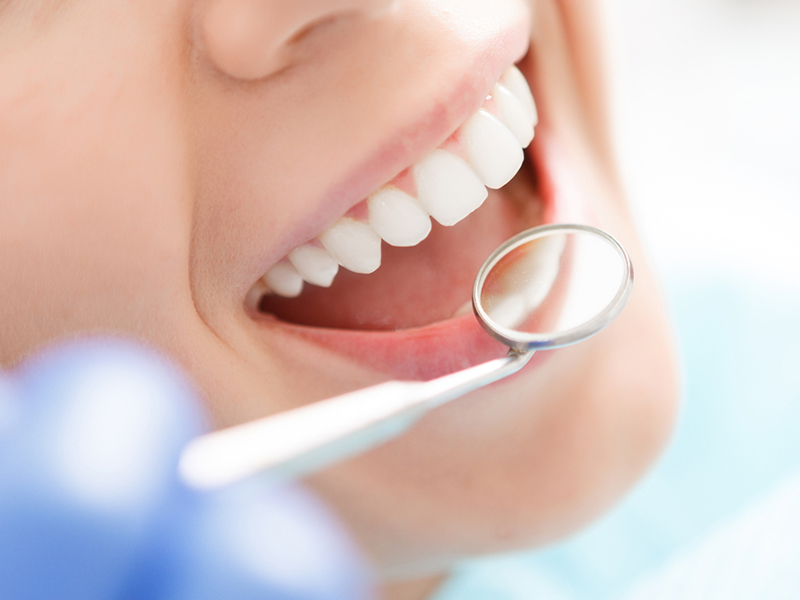
The team of teeth hospital in Delhi uses a series of tools to clean the teeth, which include a small mirror, a variety of wedges or tooth scrapers (hook-shaped instruments), a teeth polisher with different head sizes, a small water hose and a suction hose. The scrapers help to gently remove small portions of tartar that are difficult to remove, which can be between the teeth, below the gum line and some holes in crowns. If the hygienist takes a little longer with the scraper, this means that there is more than just a little tartar build-up. You may feel a little sensitivity or uncomfortable feeling.

What to Expect from Deep Cleansing?

Deep cleaning teeth cost requires two steps of scaling and scaling of the tooth root, and is considered the highest level (“gold standard”) for the treatment of chronic gum disease. During the process of deep cleaning the scaling is more extensive, cleaning more deeply the surface of the gum line and always around the surface of the tooth. The hygienist could use a manual scaling tool as described above, or a laser or ultrasonic instrument.

The Innovative Dimensions in Dental Rehabilitation – New Vistas to Age Old Science

Dental care has seen a major upheaval since past two decades with not only the advent of new specialties in the field but also rising patient awareness and needs.

Specialists in every dental specialisation adorned with their rich clinical experiences brings the required diligence that this field demands.

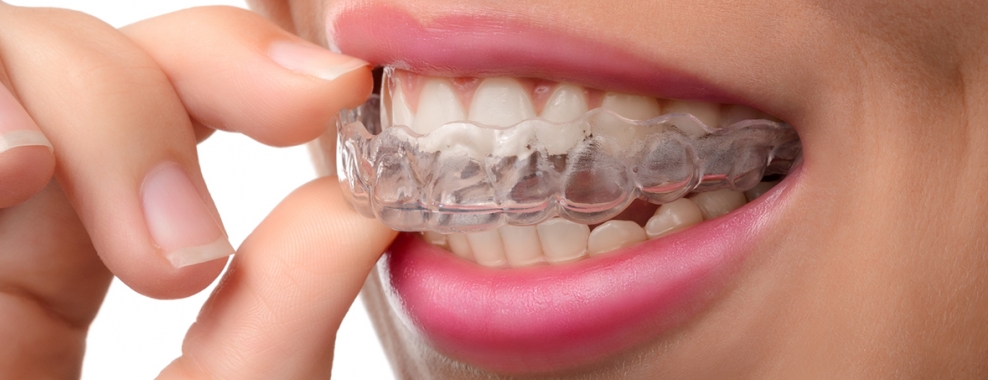
To ensure a comprehensive treatment  there is a plethora of technologies which  include  digital scanning with CT scans and OPG, CAD CAM scanners, CEREC Single Visit Crowns, invisible braces and laser dentistry. The TRIOS INTRA ORAL SCANNERS offer complete digitalisation to provide even the submilimiter accuracy in no time. This facility helps us to eliminate conventional and cumbersome impression taking procedure. The CEREC one visit crowns are highlights which stand as a testimony to the growing automation in dentistry to provide immediate relief not only for mastication but also aesthetics. Since it’s a new innovation it’s  being practiced in a very few institutions in our country, one being our dental centre. Besides aiding a clinician, using technology  it helps in patient education and monitoring of oral health status for a long term  assessment.

Dental implantology seen recently as harbinger of change in the way dental prosthesis are being provided has opened up various permutations and combinations to give the right balance of the required functionality with beautiful aesthetics and smile correction. This relatively new field has garnered much interests not only among academicians but patients alike. Incorporating 3D GUIDED IMPLANT SURGERIES to achieve the aim of minimally invasive dentistry is another such pioneering invention.

Overall the aim remains to  get more inclusive and comprehensive treatment to every patient if possible on the bed rock of our high end technology and rich knowledge pool.


Written By

Dr. (Prof.) Sarika Choudhry Solanki

BDS, MDS (Conservative Dentistry & Endodontics),

MD (Dental Lasers, Venia University, Austria)
HOD

Dental Care

5 Ways of Enhancing Your Smile

They say when you flash your smile you lit up the world of people around you. Everyday life is very much determined by how bright and wide your smile is. But some of us are probably not so comfortable with flashing our teeth as they do not look pristine. Add to that there is tooth decay and gum disease, two of the most notorious culprits that wear down your smile profile. Regardless of the underlying cause, the best dental hospital in Delhi can still change the look of your smile. Over the years these methods of smile treatment have not only improved the aesthetics but also the oral health. Take a look at the 5 ways of enhancing your smile.

1. Dental crowns- Dental crowns can change your smile by repairing or strengthening damaged or discolored teeth. They’re fitted over existing tooth structures, helping to restore the tooth’s natural appearance and function. Crowns may also be placed following a root canal treatment or to support a dental bridge. Crowns are generally made from porcelain or ceramic that’s color-matched to the rest of your teeth for a natural-looking finish. They can also be made from metal with an outer layer of porcelain, or metal alloys. It normally takes two visits to your dentist to get a crown fitted, not counting any other treatments that may be needed such as a root canal.

2. Implants- This is quite a critical procedure as it involves the replacement of an entire tooth. Replacing a missing tooth can impact a lot, including your ability to speak and chew or the look of your smile, and your overall health. Implant is a titanium post placed into your jaw, acting as an artificial tooth root that supports a crown. It offers a more fixed solution compared to something like dentures. Not everyone is a candidate for dental implants. They may not be suitable for you if you have an oral health condition such as gum disease or medical conditions such as diabetes. Smoking can also cause complications with implants and affect recovery times. Continue reading